Insomnium — Netherworlds
Ten albums in, the Finnish masters of melancholy open with a 17th-century song, borrow a Sámi myth about the end of the world, and write the catchiest track of their career.
 By Huginn
Few bands have made sadness sound as beautiful, or as consistent, as Insomnium. Their tenth album is the one where the Finns stretch furthest, from a Baroque art song to an eight-minute duet with a fellow giant of Finnish metal, and it is among the best things they have done.
Ten albums of winter
Insomnium have been the gold standard of melodic death metal for most of two decades. Since Above the Weeping World in 2006, through Winter's Gate, Heart Like a Grave and Anno 1696 in 2023, the band from Joensuu have barely released a weak record. Their formula is simple to describe and hard to copy: windswept, harmonised guitars, Niilo Sevänen's deep, authoritative growl, clean choruses that ache, and a mood that sits somewhere between a funeral and a long walk in the snow.
Netherworlds does not throw that formula away. It widens it. The band's own description is a deeper journey into shadowy territory, and Blabbermouth's Dom Lawson, who gave it 9/10, went as far as to suggest it may be their finest album, before adding that their standards are so high it is almost impossible to tell.
A new guitarist and a new sound
The record marks what the band call a new production era. Jens Bogren produced and mixed it at Fascination Street Studios, with Miiro Varjus working alongside the band throughout as producer and engineer, and Tony Lindgren mastering. The line-up has changed too. Tomy Laisto joins on guitar and clean vocals beside Ville Friman and Markus Vanhala, with Sevänen on vocals and bass and Markus Hirvonen on drums. Three guitarists who all sing gives the band more room for harmonies than ever, and Lawson credited Laisto's arrival with adding depth and technical skill to the writing.
The result is the band's most cinematic-sounding record: layered guitars that seem to go on forever, choirs of clean vocals, and a sense of space that makes even the fast songs feel cold and wide.
From Purcell to the end of the world
The first surprise comes before a single riff. "The Cold Song" is a version of Henry Purcell's 17th-century aria from King Arthur, the shivering song of the Cold Genius woken from the ice. Lawson found it plaintive and emotionally riveting. It is also a perfect statement of what this band is about: the oldest kind of melancholy, sung through frozen lips.
From there the album moves through its most direct material. "Shadowlife" and "Remembrance" are big, melodic opening anthems. "Gleam in the Black" is, in Lawson's words, the catchiest and most addictive song the band has ever recorded. Sevänen calls it one of the faster songs on the album and describes its lyric as a dark, mysterious love story that reflects the record's mood.
Then the album opens out. "The Hour Grows Late" is an eight-minute epic with Tomi Joutsen of Amorphis as guest vocalist, and Lawson called it the progressive peak of the band's ambitions: icy, grand and sharply melodic. It makes sense as a pairing, too. The two Finnish bands are heading out on a co-headlining North American tour together this winter.
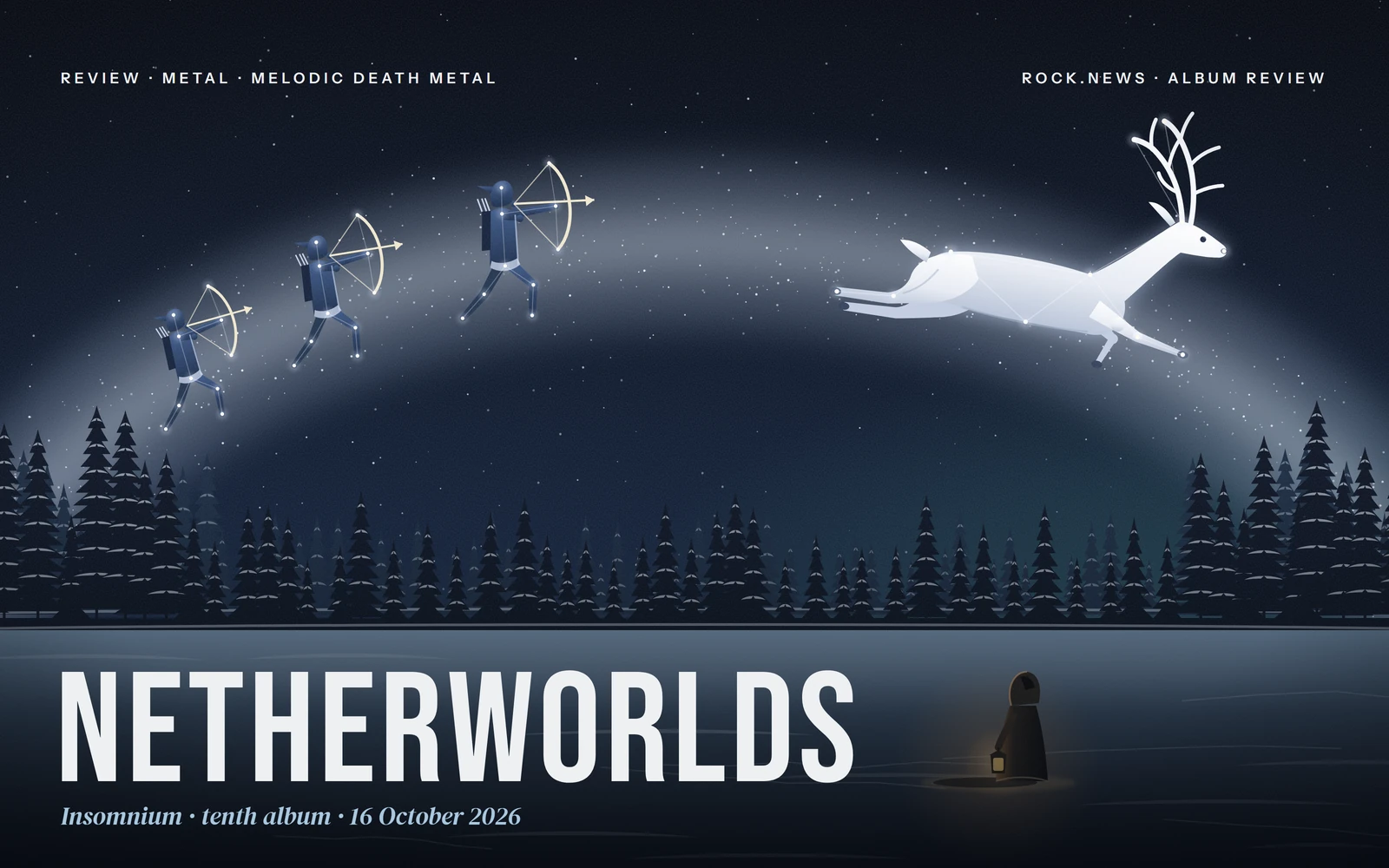
"Arch of the Sky", at six and a quarter minutes, is where the album's title starts to make sense. Friman says it introduces the "proggier side" of the record, and the song moves through shifting meters, alternating calm passages with heavy ones. Its lyric draws on Sámi folklore: celestial hunters chase a deer across the arch of the sky, and the chase must never end, because if the hunters ever catch it the sky collapses and the world ends with it. It is one of the best images the band has ever written around, and the music, always running, never resolving, fits it exactly.
The back half keeps the quality up. Lawson singled out "Pathways of the Night" as one of the best melodic songs of their career. After "Ethereal Sleep" and "The Banished", the record closes with "Journey's End", a slow, orchestral-feeling meditation on love and mortality that ends the album the way it began, in the cold.
The reservations
The reviews we read are close to unanimous, and it is hard to find a weak song in the running order. The caveats are matters of taste. The proggier turns of "Arch of the Sky" and "The Hour Grows Late" are the album's boldest moves, and fans who come to Insomnium for compact, four-minute anthems may find them a stretch. And if you have never warmed to the band's mix of growls and aching clean choruses, nothing here will change your mind. These are small complaints about a band doing exactly what it does best, at the top of its game.
Verdict
8.5/10rock.news review score · how we score
Verdict: Netherworlds is Insomnium at their most ambitious and most complete: a Purcell aria at the start, a Sámi myth about the end of the world in the middle, and their catchiest song somewhere in between. It is a melodic death metal record of real beauty and real scale, and one of the strongest in a crowded autumn for metal. Start with "Gleam in the Black", then let "Arch of the Sky" and "The Hour Grows Late" do the rest.
No ranking score yet: the album came out after the window of our first-half rankings, so the score above is our review score alone.
Netherworlds came out after the window of our first-half rankings, so it is not in our rankings yet. For the year's best-rated metal records so far, see Metal 2026.